
Pool Pump Troubleshooting Guide: Expert Solutions for Common Pump Problems
Pool pumps keep water clean and safe but can lose performance from wear, blockages, or electrical faults. This concise guide gives practical diagnostics and repair options so you can identify problems quickly and protect your pool investment.
We cover why pumps stop, common symptoms, electrical faults, noisy-pump troubleshooting, motor repair vs replacement, correct priming, and when to call a professional.
Why Is My Pool Pump Not Working? Identifying Common Causes
Pumps fail mainly for three reasons: electrical faults, flow restrictions, or worn components. Find the root cause before attempting repairs to avoid wasted time and expense.
Common causes of pump failure include:
- Electrical Issues: Tripped breakers, bad capacitors, or damaged wiring that cut power to the pump.
- Clogged Filters: Dirty filters or blocked skimmer lines that reduce flow and overload the motor.
- Mechanical Failures: Worn seals, bearings, or a jammed impeller that reduce performance or cause leaks.
Regular inspections make these problems easier to spot and fix.
What Are the Typical Symptoms of a Faulty Pool Pump?
Spot problems early to limit damage and downtime.
- Noisy Operation: Grinding, humming, or banging often point to specific mechanical or electrical faults.
- Inconsistent Water Flow: Reduced or fluctuating circulation usually indicates blockages, air in the line, or failing components.
- Visible Leaks: Water around the pump housing typically signals seal or plumbing issues.
Document symptoms before troubleshooting or calling a technician.
How Do Electrical Issues Affect Pool Pump Operation?
Electrical faults are a common cause of sudden stoppage and can be hazardous. Check breakers, fuses, and visible wiring first—only trained personnel should open motors or electrical enclosures.
Typical electrical signs include tripped breakers, humming (often a bad capacitor), or intermittent starts due to loose or damaged wiring. Routine electrical checks reduce unexpected failures.
How Can I Fix a Noisy Pool Pump? Practical Troubleshooting Tips
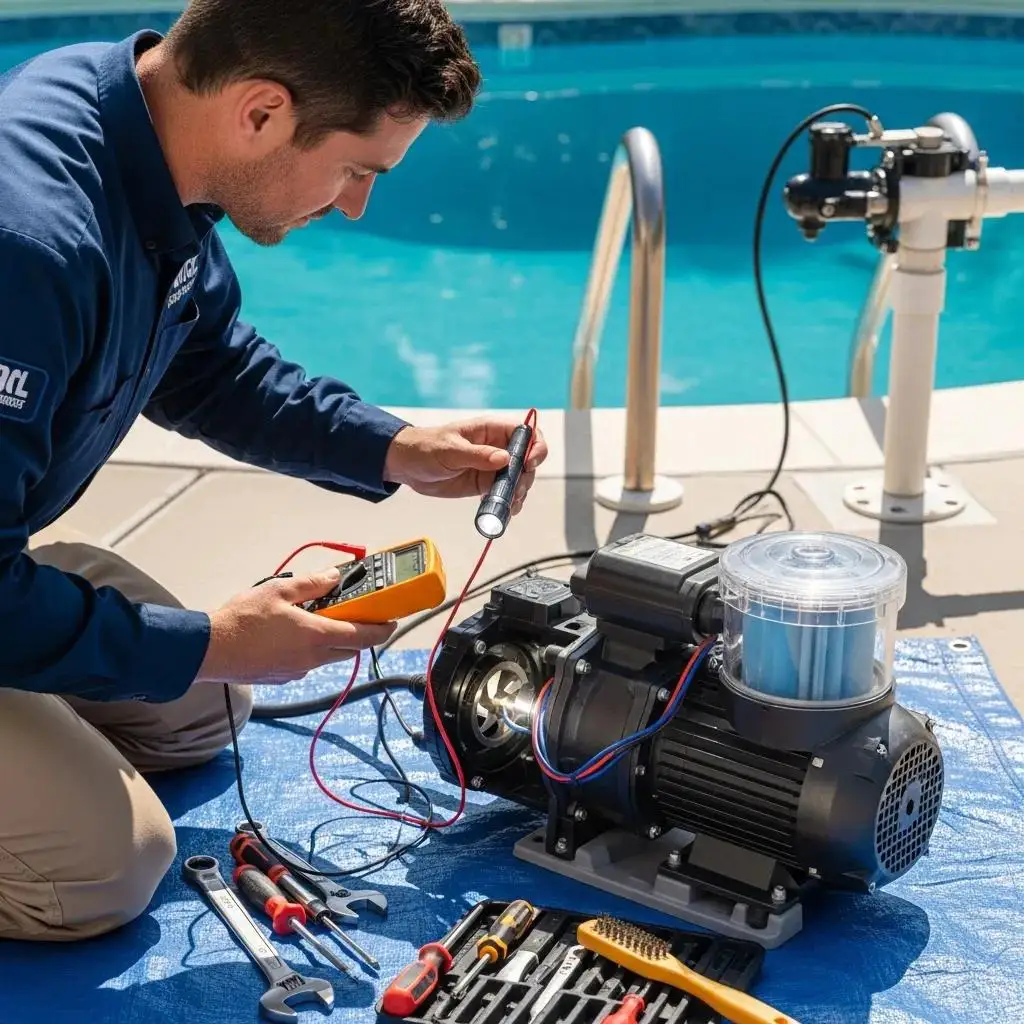
Noisy pumps are often repairable. Use a methodical approach to avoid replacing parts unnecessarily.
- Identify Noise Sources: Localize whether noise stems from the motor, impeller, or plumbing vibrations.
- Check for Blockages: Inspect and clean the strainer basket, pump housing, and impeller for debris.
- Tighten Loose Parts: Secure fittings, mounts, and screws to eliminate rattles and vibration.
If noise continues after basic checks, engage a qualified technician to inspect bearings, motor internals, or cavitation causes safely.
What Causes Pool Pump Noise and How to Diagnose It?
Different sounds point to different faults—matching the sound to the fault speeds diagnosis.
- Humming: Often electrical (capacitor or wiring) or a motor struggling to start.
- Grinding: Usually worn bearings or debris contacting rotating parts.
- Banging: Could be loose components or cavitation from air in the suction line.
Note when the noise occurs (start-up, steady run, or under load) to help the technician diagnose it correctly.
When Should You Consider Pool Pump Motor Repair or Replacement?
Decide based on motor condition, repair price, and expected life. Small repairs make sense for otherwise healthy motors; repeated failures or high repair costs suggest replacement.
- Signs of Motor Failure: Persistent unusual noises, frequent breakdowns, or tripping breakers.
- Cost Considerations: If repairs approach the cost of a new motor or unit, replacement is often more economical.
- Expert Recommendations: A professional can estimate remaining life and give a repair-versus-replace recommendation.
Compare repair estimates with replacement cost and expected lifetime to choose wisely.
How Do I Prime and Start a Pool Pump Correctly? Step-by-Step Guide
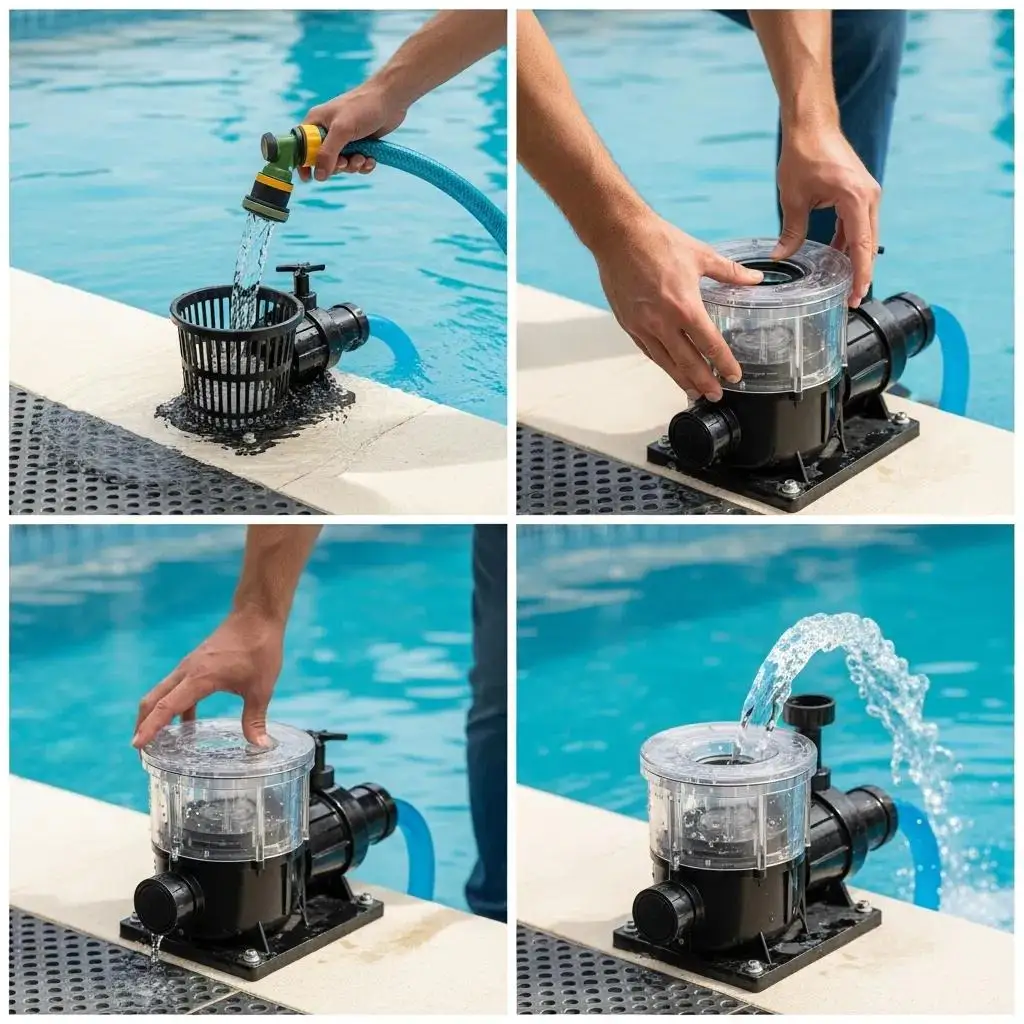
Priming fills the pump with water and removes air so the pump can develop suction; perform it carefully to avoid damage.
- Turn Off the Pump: Always power down before opening the lid.
- Fill the Pump Basket: Add water to displace air pockets.
- Replace the Lid Securely: Ensure a tight seal to prevent air ingress.
- Turn On the Pump: Start the pump and verify steady flow and pressure.
Follow these steps in order to ensure proper suction and avoid dry running.
What Is the Importance of Priming in Pool Pump Function?
Priming ensures the pump’s internal waterways are full of water, enabling the pump to move liquid efficiently; without it the pump can run dry, overheat, and be damaged.
To further understand the fundamental principle behind priming, consider how centrifugal pumps operate differently from other pump types.
Centrifugal Pump Priming: Essential for Operation
A centrifugal pump is primed when its internal waterways are filled with the liquid to be moved, replacing air, gas, or vapor. Removal of air can be done manually or automatically depending on the equipment and controls. Unlike sealed positive displacement pumps, centrifugal pumps cannot always clear suction-line air unaided; while they can displace air, the low density of air means the generated pressure is small and priming is required for reliable operation.
Priming, 1998
The main benefits of correct priming are:
- Enhanced Efficiency: Proper priming restores full flow and reduces energy waste.
- Reduced Wear and Tear: Prevents dry running and protects seals and bearings.
- Improved Water Quality: Consistent circulation supports effective filtration and chemical distribution.
Priming protects equipment and maintains reliable circulation.
How to Safely Prime Your Pool Pump to Avoid Damage?
Use safe practices and manufacturer guidance when priming to protect yourself and the pump.
- Use the Right Tools: Have a wrench and any required seals or O-rings ready.
- Check for Leaks: Inspect connections and housing before starting.
- Follow Manufacturer Instructions: Use the procedure specific to your model.
These precautions reduce the risk of damage during priming.
When Should I Call for Professional Pool Pump Repair?
Call a professional when issues persist, repairs are complex, or safety (especially electrical) is a concern.
- Persistent Issues: Ongoing faults after basic troubleshooting.
- Complex Repairs: Tasks requiring special tools, motor work, or electrical service.
- Safety Concerns: Any uncertainty about electrical systems or structural integrity.
What Maintenance Services Does Aqua Jet Pools Offer in Hudson Valley?
Aqua Jet Pools provides plans for routine and seasonal care to keep pools safe and reliable.
- Weekly Maintenance Services: Cleaning and chemical balancing to maintain water quality.
- Seasonal Maintenance Plans: Pre-season and closing checks and preparations.
- A la Carte Options: Equipment checks, repairs, and other tailored services.
These options help homeowners reduce unexpected repairs and maintain consistent water quality year-round.
How Does Professional Repair Ensure Long-Term Pump Reliability?
Professional service offers accurate diagnosis and proven repairs that extend equipment life and reduce total ownership cost.
- Expert Diagnostics: Professionals identify root causes that are easy to miss.
- Preventive Maintenance: Regular checks catch small issues before they become major failures.
- Quality Assurance: Work often includes warranties that protect the customer.
Investing in professional care helps ensure dependable pool operation season after season.
Frequently Asked Questions
What are the signs that my pool pump needs to be replaced?
Replace a pump if it has frequent breakdowns, recurring leaks, persistent unusual noises, or if repair costs approach replacement. Older pumps (roughly ten years or more) showing significant wear are often better replaced after a professional assessment.
How often should I perform maintenance on my pool pump?
Inspect and clean the pump and filter monthly, and perform seasonal servicing before opening and after closing the pool. Follow the manufacturer’s maintenance schedule for specific intervals.
Can I troubleshoot my pool pump issues myself?
Homeowners can check for clogs, verify electrical connections at the breaker, and note unusual sounds. For electrical or internal mechanical work, contact a professional to avoid safety risks.
What should I do if my pool pump is leaking?
Turn off the pump and identify the leak source. Tighten fittings for minor leaks; worn seals, cracks, or persistent leaks require professional repair to avoid further damage.
How can I improve the efficiency of my pool pump?
Keep filters clean, remove debris, and run the pump during off-peak hours to save energy. Upgrading to a variable-speed pump delivers the best efficiency gains by matching output to pool needs.
What are the risks of not priming my pool pump correctly?
Improper priming can cause dry running, overheating, and rapid wear of internal parts. Air pockets reduce flow and stress the system, increasing the likelihood of costly repairs or replacement.
How can I tell if my pool pump motor is failing?
Persistent humming or grinding, poor or no circulation, and repeated tripping of breakers indicate motor trouble. If the motor runs but flow is inadequate, schedule an inspection for possible repair or replacement.
Conclusion
Systematic troubleshooting and regular maintenance keep pumps efficient, reduce repair costs, and maintain water quality. Understand common faults, perform basic checks, and call a professional for complex or unsafe repairs to protect your pool and enjoy worry-free swimming.