Category: Pool Service

  • Understanding Pool Pump Warranty Claims Process

    Understanding Pool Pump Warranty Claims Process

    Quick Answer: Most pool pump warranties cover manufacturing defects for 1 to 3 years. To file a claim, you’ll need proof of purchase, installation date, and documentation of the failure. Claims typically go through the manufacturer — not your pool service company.

    Pump fails. You assume it’s covered. Then you find out the claim got denied because the pump was installed without a licensed contractor, or the filter was too dirty and caused the motor to overheat.

    ‍

    Knowing how the process works before you need it saves a lot of frustration.

    ‍

    What’s Actually Covered Under a Pool Pump Warranty

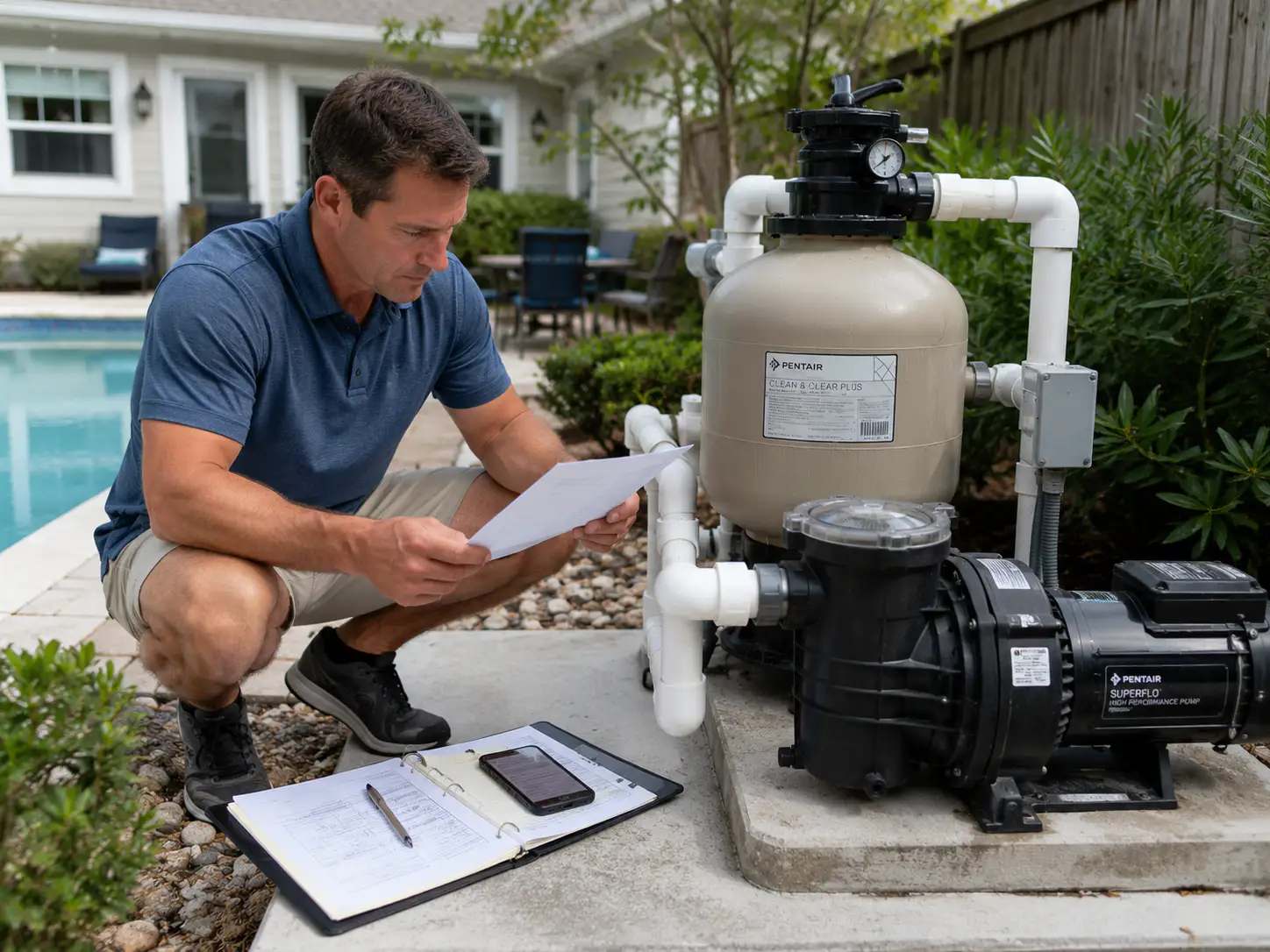
    Pool pump warranties — from Pentair, Hayward, Jandy, and similar brands — generally cover manufacturer defects. That means the parts failed because they were made wrong, not because something happened during use.

    What they don’t cover is usually more of a list:

    ‍

    • Damage from running the pump dry (no water in the lines)
    • Overheating from a clogged filter or blocked return
    • Improper installation (undersized piping, wrong voltage)
    • Physical damage, flooding, or power surges
    • Normal wear after the warranty period

    ‍

    How to File a Pool Pump Warranty Claim

    Step one: contact the manufacturer, not your pool store. Pentair, Hayward, and Jandy all have warranty claim portals or phone lines. Your dealer or installer may be able to help facilitate, but the claim goes to the manufacturer.

    ‍

    What you’ll need:

    ‍

    • Proof of purchase (receipt or invoice)
    • Serial number from the pump (label on the motor housing)
    • Installation date and installer information
    • Description of the failure and any error codes if applicable
    • Photos of the pump and the failure if possible

    ‍

    From there, the manufacturer may send a technician to inspect, or ask your local dealer to diagnose. They’ll determine if it’s a covered defect or not.

    ‍

    How to Improve Your Odds of Approval

    Keep your receipt. Sounds obvious, but a lot of claims get complicated when people can’t prove purchase date. Register your pump online when you buy it — most manufacturers have warranty registration on their website.

    If the pump was professionally installed, get a copy of the installation paperwork. Claims on pumps installed by licensed contractors tend to go smoother because it removes the “improper installation” objection.

    ‍

    When AquaJet Can Help

    We’ve worked with warranty claims on Pentair and Hayward pumps. If your pump fails and you’re not sure whether it’s a warranty issue or something else, call us first. We can diagnose it, document the failure properly, and help you put together the claim package. A well-documented claim gets processed faster.

    ‍

    Frequently Asked Questions

    Q: How much should I expect to spend on pool pump replacement if the warranty doesn’t cover it?

    Pump replacement costs vary based on the pump type and horsepower. A standard single-speed pump replacement runs $400 to $700 installed. Variable-speed pumps — which are now required by federal law on new installs — typically run $800 to $1,400 installed. Brands and size affect the number significantly.

    ‍

    Q: Does installation by a non-professional void my pump warranty?

    It depends on the manufacturer. Some require licensed contractor installation to maintain full warranty coverage. Others allow homeowner installation but place the burden on the homeowner to prove the failure was a manufacturing defect. Read the warranty card before deciding.

    ‍

    Q: My pump is making a loud noise — is that a warranty issue?

    Possibly. Bearing failure is a common manufacturing defect that shows up as grinding or squealing noise. Document when it started and call the manufacturer or your pool service professional. Don’t wait — running a failing pump can cause secondary damage that voids the claim.
  • Signs You Should Winterize Your Pool Now

    Signs You Should Winterize Your Pool Now

    Quick Answer: If temps are consistently dropping below 65°F, algae has stopped growing, and you’re using the pool less than once a week — it’s time. Waiting too long risks freeze damage to your pipes, pump, and filter.

    Most pool owners wait too long. They figure they’ll squeeze in one more swim, one more weekend — and then November hits and they’re scrambling. Closing a pool the right way takes a few hours. Fixing freeze damage takes a few thousand dollars.

    ‍

    Here’s how to tell you’re past the “wait and see” stage.

    ‍

    Water Temps Drop Below 65°F

    This is the most reliable signal. Once the water stays below 65°F, algae growth slows to almost nothing. That matters because the whole point of your chemicals is to fight algae. When algae stops being a threat, you’re basically paying to maintain a pool you’re not using.

    Pick up a basic pool thermometer and check in the morning. Three days in a row under 65? Time to start the winterization process.

    ‍

    You Haven’t Swum in Two Weeks

    Be honest. If the cover’s been on longer than it’s been off, the pool is already in off-season mode — your wallet just hasn’t caught up yet. Chemical costs, electricity for the pump, routine checks — it adds up fast when you’re not using it.

    ‍

    Leaves Are Dropping Faster Than You Can Skim

    Fall debris is a major headache for open pools. Leaves break down, release tannins, and stain the plaster. Your filter works overtime. Algae gets a head start on organic material sitting on the bottom.

    If you’re spending more time with the skimmer than you’d like, closing is the smarter move.

    ‍

    Freeze Warnings Are in the Forecast

    Florida doesn’t get hard freezes often, but when it does, water sitting in exposed pipes and equipment can crack lines. One overnight freeze on an unprotected pool can damage your pump housing, filter tank, or heater exchanger.

    Don’t gamble on the forecast. If temps are dropping into the 30s, close the pool or at least run your pump overnight — and call us if you need help fast.

    ‍

    Your Chemical Balance Has Been Off for Weeks

    If you’ve been fighting cloudy water, persistent algae blooms, or pH that won’t hold — and you’re not using the pool much — winterizing with a fresh chemical balance is often the easier fix. A proper winterization treatment keeps the water stable for months without daily management.

    ‍

    Frequently Asked Questions

    Q: What happens if I don’t winterize my pool?

    Skipping winterization can lead to algae blooms that are expensive to treat, scale buildup on surfaces, and in colder climates, freeze damage to plumbing and equipment. Even in Florida, leaving pool chemistry unbalanced through the off-season leads to staining, cloudy water, and a harder opening in spring.

    ‍

    Q: Can I winterize my own pool or should I hire a professional?

    You can do a basic DIY close — lower water level, add winterizing chemicals, cover the pool. But if you have a heater, automation system, or in-floor cleaning system, professional winterization is worth it. One mistake on a $3,000 heater is a lot more expensive than a service call.

    ‍

    Q: How long does pool winterization take?

    A professional winterization typically takes 1 to 2 hours depending on the pool size and equipment setup. DIY takes longer your first time — budget 3 to 4 hours.

    ‍

    Q: When should I open my pool again in the spring?

    Aim for when water temps are consistently back above 65°F. In Florida, that’s often February or March depending on the region. Opening too early wastes chemicals. Opening too late gives algae a head start.

    ‍